A sanctions data provider updates its records after a new Russia designation. One update points to a possible connection with a bank’s existing customer. What happens next?
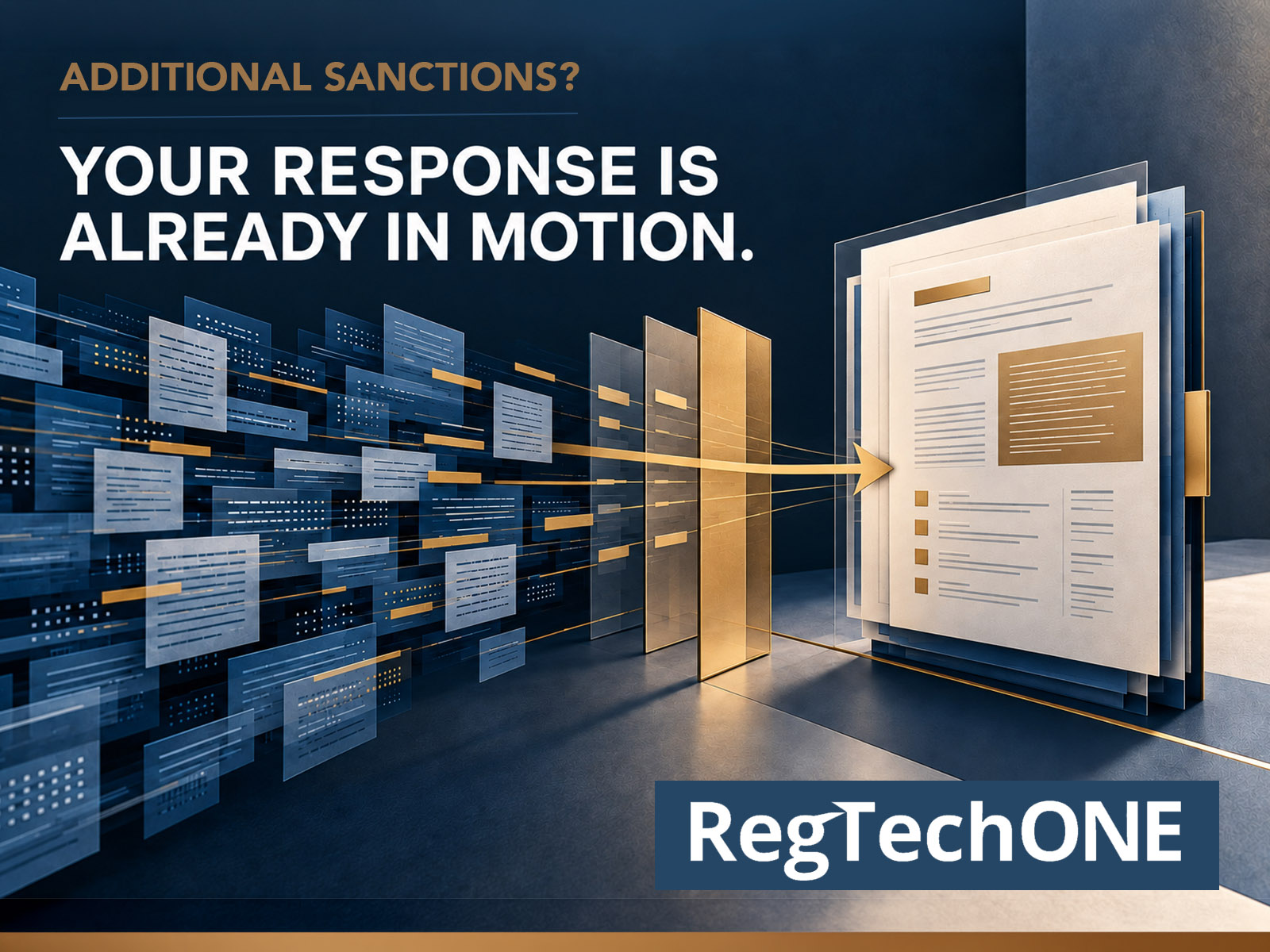
With RegTechONE, the bank can put that question to work across a connected compliance process. The platform ingests the data, screens it against existing records, applies the bank’s configured rules, and brings a meaningful result into a case for review. The investigator can see the relevant customer information and follow the bank’s established path to a decision.
The bank might also choose to add RegTechONE’s Summarization Agent to that workflow. When screening produces a hit, authorized users can configure the agent to review the available information, summarize and analyze the names and relationships involved, and assemble a clearer picture of the potential exposure—all before an analyst opens the case. The analyst begins with that context in hand and remains responsible for assessing the hit and making the decision.
The new Russia sanctions requirements make this capability timely. Their significance for a bank will emerge through a continuing stream of designations, data updates, guidance, and decisions about how the requirements apply. RegTechONE gives institutions a way to handle that stream at scale while retaining control over the response.
New intelligence enters a workflow already built to act
Consider an illustrative scenario. A bank subscribes to a sanctions data service that adds information about an entity affiliated with a Russian financial institution. The bank already has a customer whose records may connect to that entity.
RegTechONE can automatically ingest updates from the bank’s preferred data subscription and compare them with existing records. The bank chooses what to screen, which data sources to use, and how to configure the screening algorithms and sensitivity. Secondary evaluation can compare additional fields to help distinguish a meaningful result from a name match that only looks concerning.
If the result warrants attention under the bank’s rules, it can move into RegTechONE’s integrated case management workflow. The investigator can work with customer details, documents, transaction history, and prior decisions in one place. The bank’s configured process determines the investigative steps, escalation, and approval path.
A change at the data source has now reached the person responsible for making a decision—with the information and procedure that person needs.
The institution’s rules determine what happens next
The platform does not decide what the new law means for the institution. The bank’s legal and compliance teams make that determination. RegTechONE gives authorized users the means to put their decisions into operation.
They can configure screening settings, risk models, case workflows, and approval hierarchies to reflect the bank’s requirements. Where new information is relevant to a customer’s risk, Perpetual KYC can be configured to reassess that rating. When policy or guidance changes, authorized teams can adapt the relevant workflows and settings through configuration.
That is the advantage of a platform approach. The bank’s response is expressed in the systems doing the work, from the first comparison with new data through investigation and approval. The institution can apply its established rules to a large update, then revise those rules when its interpretation or risk decision changes.
The case can take shape before an analyst opens it
A substantial sanctions update can create many potential matches. Investigators should spend their time assessing the ones that matter.
RegTechONE combines configurable matching with contextual and secondary screening to help reduce false positives. Its case manager brings the relevant records together and routes work according to the institution’s procedures. The platform handles repetitive screening and workflow tasks; analysts examine ambiguity, assess the facts, and make the decisions their expertise requires.
The resulting case also preserves the investigative record: What information was available, what steps were taken, who made the decision, and how the matter was resolved. That record matters when the bank needs to explain its response later.
RegTechONE: Future changes follow the same governed path
The new Russia sanctions law will not produce just a single data change. Providers will keep updating their intelligence, and institutions will keep assessing new guidance, licenses, and circumstances. Each development may call for a different response.
RegTechONE is designed for that continuing work. A bank can use its preferred data subscriptions, automate screening and risk monitoring, and configure the workflows that govern investigation. Its authorized teams can adapt those configurations as requirements evolve.
The platform’s value is easiest to see in motion: New intelligence enters; the bank’s rules determine what happens; investigators receive the cases that need judgment; and the institution retains a record of the decisions made.
These rolling changes to regulations and requirements are what configurable compliance infrastructure like RegTechONE is built for.
Want to see the process? Ask AML Partners to show how a sanctions data update moves through screening, customer risk, investigation, and approval in a RegTechONE workflow configured for your institution.