The Digital Banker recognizes RegTechONE for configurable, no-code Client Lifecycle Management across onboarding, ongoing risk management and offboarding
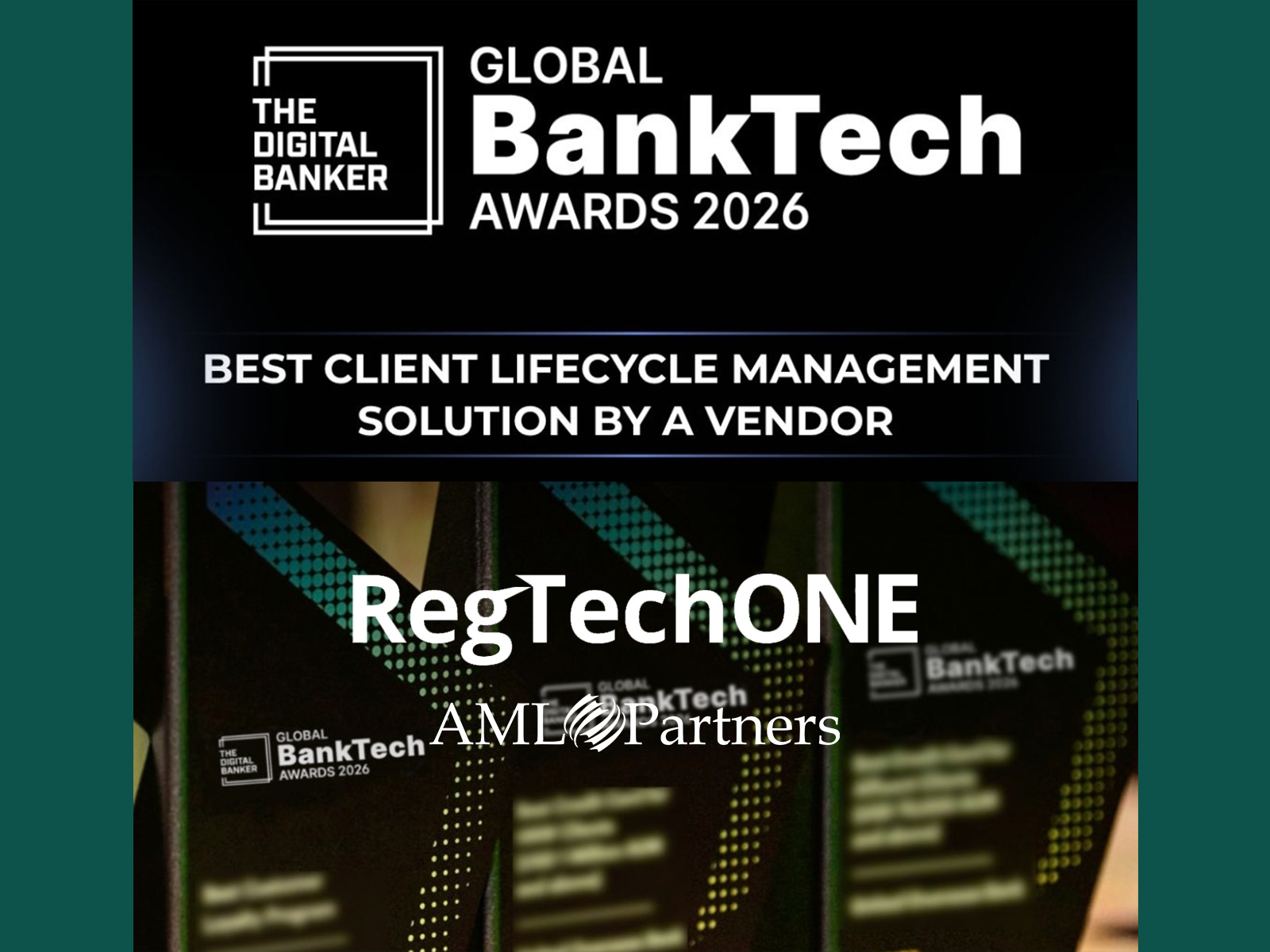
AML Partners has won Best Client Lifecycle Management Solution by a Vendor at the Global BankTech Awards 2026, recognizing RegTechONE and its configurable approach to managing the full client lifecycle.
In announcing the award, The Digital Banker highlighted AML Partners for “transforming client lifecycle management through configurable, no-code technology” and pointed specifically to RegTechONE’s ability to bring onboarding, ongoing risk management and offboarding together within a single configurable environment.
That recognition gets at something important about Client Lifecycle Management: Effective CLM isn’t simply about digitizing a sequence of tasks. It is about giving financial institutions the ability to define, execute and continuously adapt how they manage client relationships.
Client Lifecycle Management has to reflect how an institution actually operates
No two financial institutions manage the client lifecycle in exactly the same way.
Each institution’s CLM can differ by customer types, products, risk appetites, jurisdictions and regulatory obligations, and more. An institution’s own policies determine what information it collects, how it assesses risk, which approvals it requires, when it triggers enhanced due diligence, how it conducts periodic and event-driven reviews, and how it ultimately manages offboarding.
Those differences make configurability fundamental to Client Lifecycle Management.
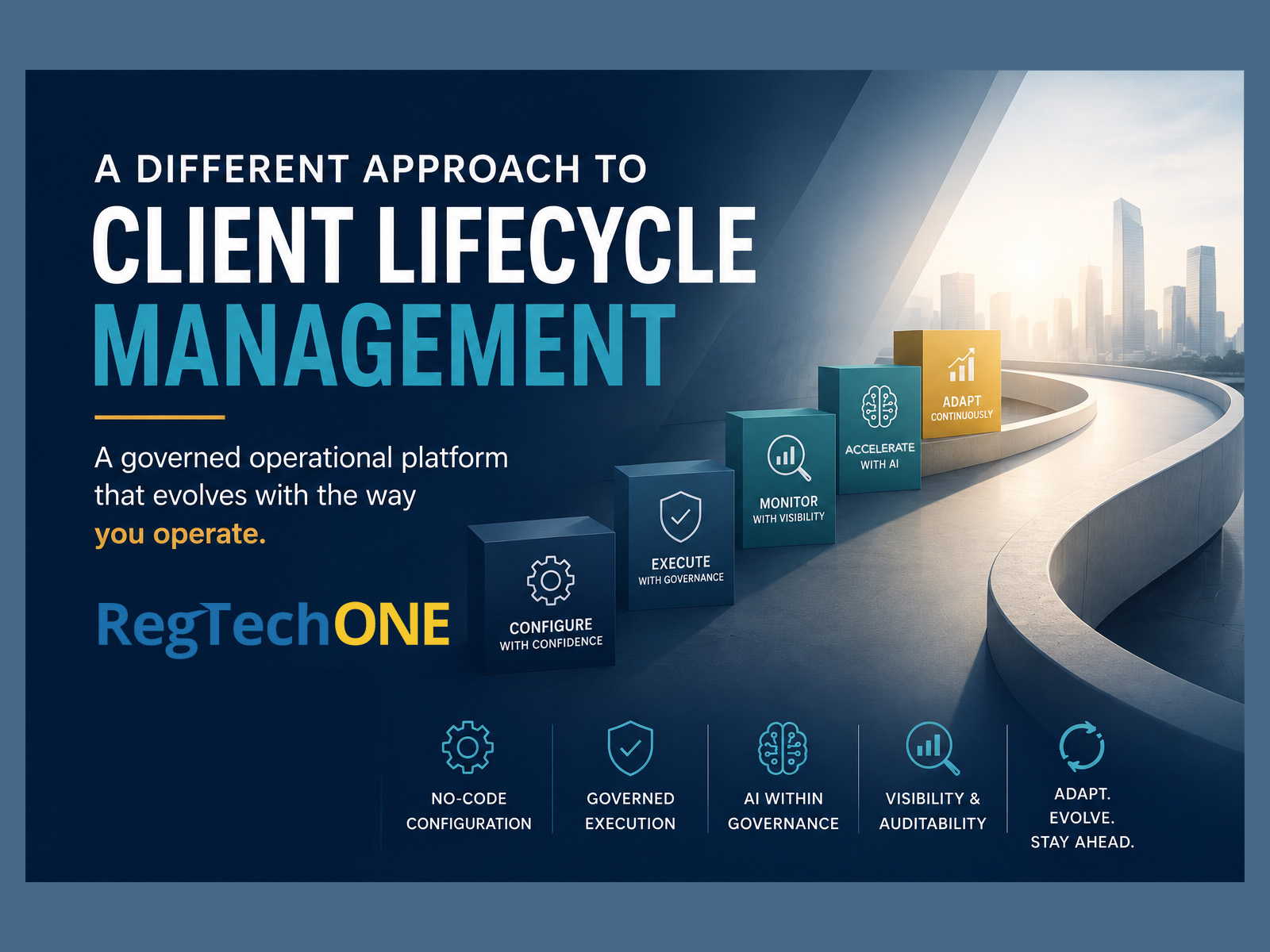
RegTechONE was designed around that reality. Rather than imposing a single prescribed lifecycle, the platform allows financial institutions to configure workflows and processes around their own business and compliance requirements.
That extends across the lifecycle—from onboarding and KYC/CDD through ongoing monitoring, risk management, remediation and offboarding. Institutions can automate manual processes, establish decision points and approvals, integrate data and systems, and define how work moves among people and technology.
The result is not simply a digital version of an existing process. It is an operating environment that the institution can continue to change.
No-code matters after implementation
That ability to change becomes particularly important once a CLM platform is live.
Client lifecycle processes do not stand still. Regulations and internal policies change. Risk models evolve. New products, markets and customer types introduce new requirements. And institutions identify better ways to structure workflows and eliminate unnecessary manual work. When those changes require repeated software development projects, even relatively small operational improvements can become expensive and slow.
RegTechONE’s no-code architecture puts much of that change closer to the business experts who understand the requirements. Authorized users can configure and modify workflows within a governed environment rather than turning every business-process change into a custom coding project.
That gives institutions greater control not only over how their CLM environment operates today, but over how readily it can adapt tomorrow.
A broader standard for banking technology
The Global BankTech Awards recognize financial institutions and technology providers using technology to address increasingly complex business and operational challenges.
That context makes this particular recognition especially meaningful for AML Partners.
Financial institutions continue to invest heavily in automation, AI, cloud computing and other technologies intended to modernize operations. But the value of those investments ultimately depends on whether the resulting systems can support the institution as its requirements continue to change.
RegTechONE approaches that challenge by making adaptability part of the platform itself.
Automation can reduce manual work. Integrated workflows can improve coordination. Centralized processes can strengthen oversight. But configurability allows the institution to keep adjusting all of those capabilities as its operating model evolves.
For AML Partners, winning Best Client Lifecycle Management Solution by a Vendor recognizes more than a set of CLM features. It validates an approach to financial-services technology built around institutional control, governed change and continuous adaptability.
And that is increasingly what modern client lifecycle management requires.
Learn more about RegTechONE Client Lifecycle Management
Explore RegTechONE CLM
See how RegTechONE supports configurable Client Lifecycle Management and Legitimacy Lifecycle Management, with no-code workflows and integrated risk, monitoring and compliance capabilities across the lifecycle.
Read our three-part Client Lifecycle Management series
How to evaluate Client Lifecycle Management (CLM) software for financial institutions
A practical guide to evaluating CLM beyond features and implementation—including governance, adaptability, business ownership and the ability to manage continuous regulatory change.
What makes the best Client Lifecycle Management (CLM) software? Why modern architecture matters
Why architecture—not the length of a feature list—determines whether a CLM platform can adapt as regulations, risks, operations and technology change.
A different approach to Client Lifecycle Management: Why we built RegTechONE
The thinking behind RegTechONE—and why AML Partners designed a governed operational platform that lets financial institutions continuously improve their client lifecycle processes rather than simply automate them.